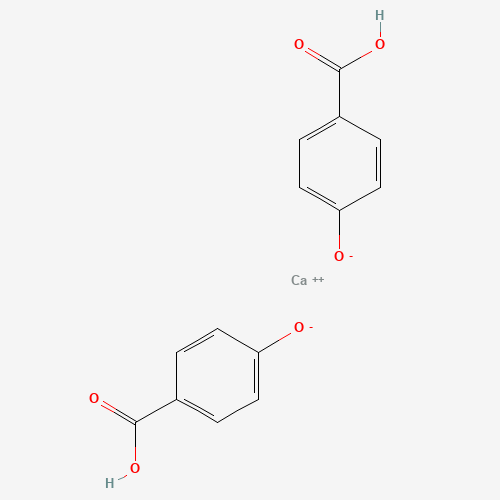
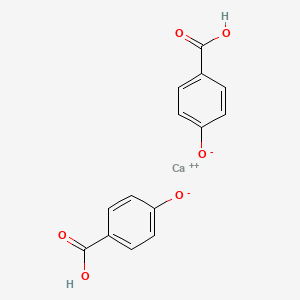
Calcium Paraben
AKA “Calcium bis(4-hydroxybenzoate), 69959-44-0, EINECS 274-235-4, DTXSID30220234, RefChem:122778, DTXCID30142725, 274-235-4, calcium;4-carboxyphenolate, MSK2535Ca, SCHEMBL1010569”
Preservative
Ingredient Facts
Calcium paraben
AKA: Calcium bis(4-hydroxybenzoate), 69959-44-0, EINECS 274-235-4, DTXSID30220234, RefChem:122778, DTXCID30142725, 274-235-4, Calcium;4-carboxyphenolate, MSK2535Ca, SCHEMBL1010569
Preservative · Preservative · EWG: 4
Synthetic
Preservative
Not Clean
Calcium bis(4-hydroxybenzoate)
Formula
C14H10CaO6
Mol. Weight
314.30
CAS #
69959-44-0
Form
Powder
See origin →
Functions
Preservative
Keeps your product from growing bacteria, mold, or yeast. Without these, that jar of cream becomes a petri dish in about a week.
Anti-Inflammatory
Boosts Collagen
Antimicrobial
Prevents microbial growth
Traditional Use
Parabens were first synthesized in 1924 as synthetic preservatives designed to replace traditional salt-based preservation methods. The calcium salt form was developed to extend shelf life in cosmetic formulations.
Skin Types
●all-skin-types
Best For
General
Pregnancy & Breastfeeding Safe
Yes
EWG
4
CIR
Safe as used
Pregnancy
Yes
Restricted By
CIR Safety Findings
medical-approval
all-shades-safe
Phototoxicity Concern
Concentration Guide
8.0%
0%11%
Reg. Limit
EU regulatory limit: 8.0%. 0,4% (as acid) for single ester 0,8% (as acid) for mixtures of esters Source: EU Cosmetics Regulation (EC) 1223/2009, Annex V (Preservatives), Entry 12. Dermal absorption: 0.1%. Source: CIR Safety Assessment (CIR Seq 746).
Regulatory Agencies
Verified Jun 2026
Data: PubChem · CosIng · EWG · CIR