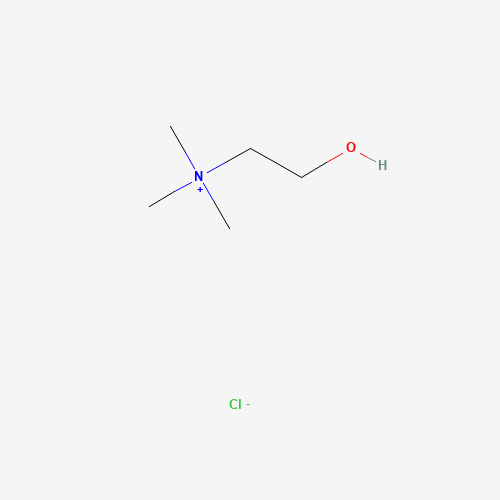
Choline Chloride
AKA “67-48-1, Lipotril, 2-Hydroxy-N, N, N-trimethylethanaminium chloride, Hepacholine, Paresan, (2-Hydroxyethyl)trimethylammonium chloride, Hormocline, Biocolina, Biocoline”
Humectant
Ingredient Facts
Choline chloride
AKA: 67-48-1, Lipotril, 2-Hydroxy-N, N-trimethylethanaminium chloride, Hepacholine, Paresan, (2-Hydroxyethyl)trimethylammonium chloride, Hormocline, Biocolina, Biocoline
Humectant · Humectant · EWG: 4
Synthetic
Humectant
Skin Conditioner
Not Clean
Choline chloride is a quaternary ammonium salt with choline cation and chloride anion. It has a role as an animal growth promotant. It is a chloride salt and a quaternary ammonium salt. It contains a choline.
Solubility Very soluble (NTP, 1992)
Formula
C5H14ClNO
Mol. Weight
139.62
CAS #
67-48-1
Form
Liquid
State
Choline chloride appears as white crystals. Practically neutral aqueous solution. (NTP, 1992)
See origin →
Functions
Humectant
A moisture magnet. Pulls water from the air and deeper skin layers up to the surface to keep skin plump and hydrated.
Skin Conditioning
A catch-all term for ingredients that improve how skin looks and feels — softer, smoother, more supple. The workhorse behind most moisturizers.
Locks In Moisture
Traditional Use
Choline was identified as an essential nutrient in the early 20th century. Choline chloride is used in cosmetics for its hydrating and cell-regulating properties, supporting skin barrier function.
Skin Types
●all-skin-types
Best For
Dehydration
Pregnancy & Breastfeeding Safe
Yes
Verified Jun 2026
Data: PubChem · CosIng · EWG · CIR