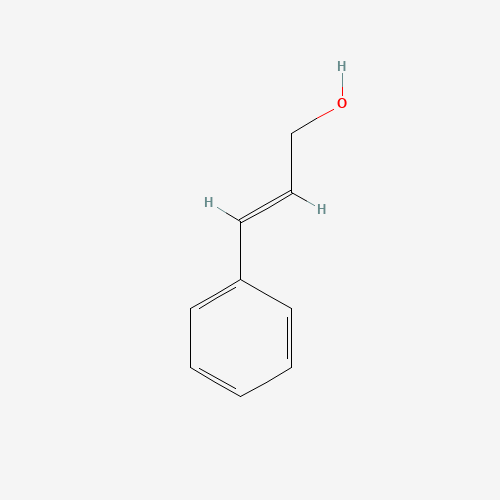





Cinnamyl Alcohol
AKA “104-54-1, 3-PHENYL-2-PROPEN-1-OL, cinnamic alcohol, (E)-3-phenylprop-2-en-1-ol, (E)-cinnamyl alcohol, Styryl carbinol, Styrone, 3-Phenylallyl alcohol, Styryl alcohol”
Ingredient
Ingredient Facts
Cinnamyl alcohol
AKA: 104-54-1, 3-PHENYL-2-PROPEN-1-OL, Cinnamic alcohol, (E)-3-phenylprop-2-en-1-ol, (E)-cinnamyl alcohol, Styryl carbinol, Styrone, 3-Phenylallyl alcohol, Styryl alcohol
Ingredient · Flavouring · EWG: 3
Synthetic
Fragrance
Safety Concern
Not Clean
Cinnamyl alcohol is a naturally occurring compound that is found within cinnamon. Due to the low levels found in cinnamon, cinnamyl alcohol is usually supplied as [DB14184] within commercial products. Cinnamyl alcohol has been shown to be a skin sensitizer, with a NOEL (No Effect Level) of ~4%. Sensitivity to cinnamyl alcohol may be identified with a clinical patch test.
Solubility FREELY SOL IN ALC, ETHER, OTHER COMMON ORGANIC SOLVENTS; SOL IN WATER, GLYCEROL; CLEARLY SOL IN 3 VOL 50% ALC
Formula
C9H10O
Mol. Weight
134.17
CAS #
104-54-1
Form
Liquid
State
Pellets or Large Crystals
See origin →
Functions
Flavouring
Perfuming
Added for scent. Can be natural or synthetic. Common irritant and allergen — one of the top reasons people react to products.
Adds Flavor
Adds Fragrance
Locks In Moisture
Adds pleasant taste
Adds pleasant scent
Traditional Use
Cinnamyl alcohol is a naturally occurring compound in cinnamon and other aromatic plants, historically used in traditional medicine and perfumery. It is now isolated and used in modern cosmetics primarily as a fragrance ingredient and potential antimicrobial agent.
Skin Types
●all-skin-types
Best For
General
Pregnancy & Breastfeeding Safe
Caution
Fragrance material review on alpha-amylcinnamyl alcohol.
Bhatia SP, Wellington GA, Cocchiara J, Lalko J, Letizia CS et al.
Food and chemical toxicology : an international journal published for the British Industrial Biological Research Association, 2007
Cinnamal, Cinnamyl Acetate, Cinnamyl Alcohol, Amyl Cinnamal and Amylcinnamyl Alcohol (defer to RIFM review)
Cosmetic Ingredient Review (CIR) Expert Panel
International Journal of Toxicology
Amylcinnamyl Alcohol
European Commission
EU Cosmetic Ingredient Database (CosIng)
Cinnamyl Alcohol
European Commission
EU Cosmetic Ingredient Database (CosIng)
Cinnamyl Alcohol
Environmental Working Group (EWG)
EWG Skin Deep Cosmetics Database
Verified Jun 2026
Data: PubChem · CosIng · EWG · CIR