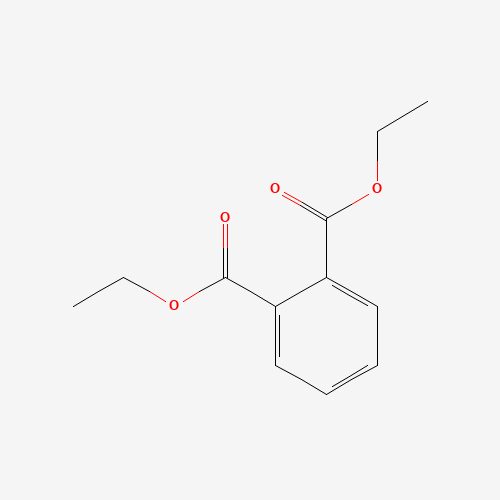
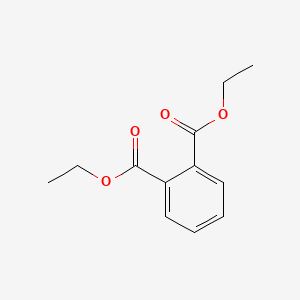
Diethyl Phthalate
AKA “84-66-2, Ethyl phthalate, phthalic acid diethyl ester, Anozol, Neantine, Phthalol, Solvanol, diethyl benzene-1, 2-dicarboxylate, Palatinol A”
Hair Conditioning
Ingredient Facts
Diethyl phthalate
AKA: 84-66-2, Phthalic acid diethyl ester, Anozol, Neantine, Phthalol, Solvanol, Diethyl benzene-1, 2-dicarboxylate, Palatinol A
Hair Conditioning · Film Forming · EWG: 3
Synthetic
Occlusive
Solvent
Skin Conditioner
Hair Care
Not Clean
Diethyl phthalate is a phthalate ester. This synthetic substance is commonly used to make plastics more flexible. Products in which it is found include toothbrushes, automobile parts, tools, toys, and food packaging. Diethyl phthalate can be released fairly easily from these products, as it is not part of the chain of chemicals (polymers) that makes up the plastic. Diethyl phthalate is also used in cosmetics, insecticides, and aspirin. Phthalate esters can cause reproductive and developmental toxicity. (L1900, A2883)
Solubility less than 1 mg/mL at 66 °F (NTP, 1992)
Formula
C12H14O4
Mol. Weight
222.24
CAS #
84-66-2
Form
Powder
State
Diethyl phthalate appears as a clear, colorless liquid without significant odor. More dense than water and insoluble in water. Hence sinks in water. Primary hazard is to the environment. Spread to the
See origin →
Functions
Denaturant
Film Forming
Creates a physical seal on skin to lock moisture in and keep irritants out. The "slugging" ingredient — barrier protection.
Hair Conditioning
A catch-all term for ingredients that improve how skin looks and feels — softer, smoother, more supple. The workhorse behind most moisturizers.
Plasticiser
Solvent
Dissolves other ingredients so they distribute evenly in the formula. Often the invisible "base" everything else is mixed into.
Antioxidant
Traditional Use
Synthetic plasticizer developed in the early 20th century, widely adopted in cosmetics during the 1950s-1960s for fragrance stabilization and product flexibility. Used extensively in nail polishes, hair sprays, and fragrances.
Skin Types
●all-skin-types
Best For
General
Pregnancy & Breastfeeding Safe
No
EWG
3
CIR
Safe as used
Pregnancy
No
Restricted By
CIR Safety Findings
medical-approval
all-shades-safe
Phototoxicity Concern
Regulatory Agencies
Dibutyl, Dimethyl, and Diethyl Phthalate and Butyl Benzyl Phthalate.
Andersen FA
International journal of toxicology, 2017
Toxicological profile of diethyl phthalate: a vehicle for fragrance and cosmetic ingredients.
Api AM
Food and chemical toxicology : an international journal published for the British Industrial Biological Research Association, 2001
Final Report on the Safety Assessment of Dibutyl Phthalate, Dimethyl Phthalate, and Diethyl Phthalate
Cosmetic Ingredient Review (CIR) Expert Panel
International Journal of Toxicology
Re-evaluation: Dibutyl, Dimethyl and Diethyl Phthalate and Butyl Benzyl Phthalate
Cosmetic Ingredient Review (CIR) Expert Panel
International Journal of Toxicology
Diethyl Phthalate
European Commission
EU Cosmetic Ingredient Database (CosIng)
Dimethyl Phthalate
European Commission
EU Cosmetic Ingredient Database (CosIng)
Diethyl Phthalate
Environmental Working Group (EWG)
EWG Skin Deep Cosmetics Database
Verified Jun 2026
Data: PubChem · CosIng · EWG · CIR