Erucic Acid
AKA “(Z)-Docos-13-enoic acid, 112-86-7, cis-13-Docosenoic acid, 13-Docosenoic acid, (Z)-, 13-cis-Docosenoic acid, Hystrene 2290, (13Z)-, 13Z-docosenoic acid, Prifrac 2990”
Acid
Ingredient Facts
Erucic acid
AKA: (Z)-Docos-13-enoic acid, 112-86-7, Cis-13-Docosenoic acid, 13-Docosenoic acid, (Z)-, 13-cis-Docosenoic acid, Hystrene 2290, (13Z)-, 13Z-docosenoic acid, Prifrac 2990
Acid · Skin Conditioning · EWG: 4
Synthetic
Skin Conditioner
Acid
Not Clean
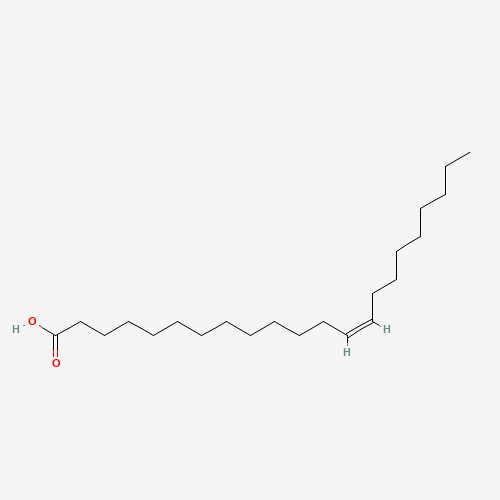
Erucic acid is a docosenoic acid having a cis- double bond at C-13. It is found particularly in brassicas - it is a major component of mustard and rapeseed oils and is produced by broccoli, Brussels sprouts, kale, and wallflowers. It is a conjugate acid of an erucate.
Solubility Soluble in ethanol, carbon tetrachloride; very soluble in ethyl ether, methanol
Formula
C22H42O2
Mol. Weight
338.60
CAS #
112-86-7
Form
Liquid
State
Liquid; Other Solid; Pellets or Large Crystals
See origin →
Functions
Skin Conditioning
A catch-all term for ingredients that improve how skin looks and feels — softer, smoother, more supple. The workhorse behind most moisturizers.
Locks in moisture
Traditional Use
A long-chain fatty acid derived from rapeseed oil, first isolated in the 19th century. Used historically in lubricants and later adapted for cosmetic formulations as an emollient and conditioning agent.
Skin Types
●all-skin-types
Best For
Dryness
Pregnancy & Breastfeeding Safe
Yes
Adrenoleukodystrophy. The chain shortening of erucic acid (22:1(n-9)) and adrenic acid (22:4(n-6)) is deficient in neonatal adrenoleukodystrophy and n
Christensen E, Grønn M, Hagve TA, Kase BF, Christophersen BO
Biochimica et biophysica acta, 1989
Dierucic Acid
European Commission
EU Cosmetic Ingredient Database (CosIng)
Erucic Acid
European Commission
EU Cosmetic Ingredient Database (CosIng)
[(Z)-broparestrol].
Rodier PN, Ceolin R, Dubois P, Fournival JL
Acta crystallographica. Section C, Crystal structure communications, 1989
Verified Jun 2026
Data: PubChem · CosIng · EWG · CIR