Formaldehyde
AKA “formalin, methanal, 50-00-0, formol, Formic aldehyde, Methylene oxide, Oxomethane, Oxymethylene, Methyl aldehyde”
Preservative
Ingredient Facts
Formaldehyde
AKA: Formalin, Methanal, 50-00-0, Formol, Formic aldehyde, Methylene oxide, Oxomethane, Oxymethylene, Methyl aldehyde
Preservative · Antimicrobial · EWG: 10
Synthetic
Preservative
Not Clean
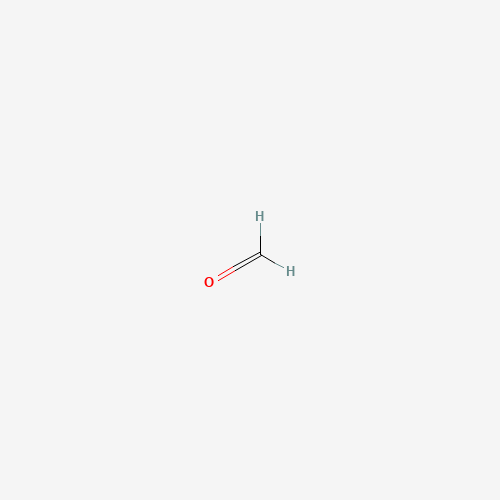
Formaldehyde is a highly reactive aldehyde gas formed by oxidation or incomplete combustion of hydrocarbons. In solution, it has a wide range of uses: in the manufacture of resins and textiles, as a disinfectant, and as a laboratory fixative or preservative. Formaldehyde solution (formalin) is considered a hazardous compound, and its vapor toxic. (From Reynolds, Martindale The Extra Pharmacopoeia, 30th ed, p717) -- Pubchem; The chemical compound formaldehyde (also known as methanal), is a gas with a pungent smell. It is the simplest aldehyde. Its chemical formula is H2CO. Formaldehyde was first synthesized by the Russian chemist Aleksandr Butlerov in 1859 but was conclusively identified by August Wilhelm van Hofmann in 1867. Although formaldehyde is a gas at room temperature, it is readily soluble in water, and it is most commonly sold as a 37% solution in water called by trade names such as formalin or formol. In water, formaldehyde polymerizes, and formalin actually contains very lit
Solubility Miscible (NIOSH, 2024)
Formula
CH2O
Mol. Weight
30.03
CAS #
50-00-0
Form
Liquid
State
Solids containing varying amounts of formaldehyde, probably as paraformaldehyde (polymers of formula HO(CH2O)xH where x averages about 30). A hazard to the environment. Immediate steps should be taken
See origin →
Functions
Antimicrobial
Keeps your product from growing bacteria, mold, or yeast. Without these, that jar of cream becomes a petri dish in about a week.
Denaturant
Preservative
Keeps your product from growing bacteria, mold, or yeast. Without these, that jar of cream becomes a petri dish in about a week.
Fights Bacteria
Traditional Use
Discovered by German chemist August Wilhelm von Hofmann in 1859 and used as a preservative in cosmetics and embalming fluids from the late 19th century onward. It became a common cosmetic preservative despite later health concerns, particularly in nail products.
Skin Types
●all-skin-types
Best For
General
Pregnancy & Breastfeeding Safe
No
Allergen Warning
⚠️ Formaldehyde
EWG
10
CIR
Safe as used
Pregnancy
No
Restricted By
CIR Safety Findings
Not a Sensitizer
medical-approval
all-shades-safe
Concentration Guide
5%
0%7%
Reg. Limit
EU regulatory limit: 5%. 5 % (as formaldehyde). Protect cuticles with grease or oil Contains formaldehyde (3) Source: EU Cosmetics Regulation (EC) 1223/2009, Annex III (Restricted Substances), Entry 13.
Regulatory Agencies
🧂Conflict of interest.
Formaldehyde as a Human Carcinogen (IARC)
Baan R, Grosse Y, Straif K, Secretan B, El Ghissassi F, et al.
The Lancet Oncology, 2009
Amended safety assessment of formaldehyde and methylene glycol as used in cosmetics.
Boyer IJ, Heldreth B, Bergfeld WF, Belsito DV, Hill RA et al.
International journal of toxicology, 2013
Amended Safety Assessment of Formaldehyde and Methylene Glycol as Used in Cosmetics
Cosmetic Ingredient Review (CIR) Expert Panel
International Journal of Toxicology
Final Report on the Safety Assessment of Formaldehyde
Cosmetic Ingredient Review (CIR) Expert Panel
International Journal of Toxicology
Final Report on the Safety Assessment of Melamine/Formaldehyde Resin
Cosmetic Ingredient Review (CIR) Expert Panel
International Journal of Toxicology
Final Report on the Safety Assessment of Polyoxymethylene Urea
Cosmetic Ingredient Review (CIR) Expert Panel
International Journal of Toxicology
Final Report on the Safety Assessment of Toluenesulfonamide/ Formaldehyde Resin and Toluenesulfonamide/ Formaldehyde Resin-80
Cosmetic Ingredient Review (CIR) Expert Panel
International Journal of Toxicology
Polyoxymethylene Melamine
European Commission
EU Cosmetic Ingredient Database (CosIng)
Polyoxymethylene Urea
European Commission
EU Cosmetic Ingredient Database (CosIng)
Tosylamide/Formaldehyde Resin
European Commission
EU Cosmetic Ingredient Database (CosIng)
Formaldehyde-Releasers in Cosmetics
de Groot AC, Veenstra M
Contact Dermatitis, 2010
Formaldehyde-releasers in cosmetics: relationship to formaldehyde contact allergy. Part 1. Characterization, frequency and relevance of sensitization,
de Groot AC, White IR, Flyvholm MA, Lensen G, Coenraads PJ
Contact dermatitis, 2010
Patch test reactivity to DMDM hydantoin. Relationship to formaldehyde allergy.
de Groot AC, van Joost T, Bos JD, van der Meeren HL, Weyland JW
Contact dermatitis, 1988
Formaldehyde
Environmental Working Group (EWG)
EWG Skin Deep Cosmetics Database
Polyoxymethylene Melamine
Environmental Working Group (EWG)
EWG Skin Deep Cosmetics Database
Polyoxymethylene Urea
Environmental Working Group (EWG)
EWG Skin Deep Cosmetics Database
Tosylamide/Formaldehyde Resin
Environmental Working Group (EWG)
EWG Skin Deep Cosmetics Database
The allergens of nail polish. (I). Allergenic constituents of common nail polish and toluenesulfonamide-formaldehyde resin (TS-F-R).
Hausen BM, Milbrodt M, Koenig WA
Contact dermatitis, 1995
b) Non-aerosol products that release formaldehyde vapours when used according to directions.
Health Canada
Health Canada Cosmetic Ingredient Hotlist
Formaldehyde
Health Canada
Health Canada Cosmetic Ingredient Hotlist
What Is Tetrasodium Etidronate and How Is It Related to Formaldehyde?
Liou YL, Boyd A, Hylwa SA
Dermatitis : contact, atopic, occupational, drug, 2018
Hidden formaldehyde in cosmetic products.
Rebekka Søgaard, Pia Brunn Poulsen, Rikke Munch Gelardi, Susann Geschke, Jakob Ferløv Baselius Schwensen, Jeanne Duus Johansen
Contact dermatitis, 2024
Tosylamide formaldehyde resin.
Stechschulte SA, Avashia N, Jacob SE
Dermatitis : contact, atopic, occupational, drug, 2008
Verified Jun 2026 · 🧪 = conflict
Data: PubChem · CosIng · EWG · CIR