Resorcinol
AKA “108-46-3, benzene-1, 3-diol, 1, 3-Benzenediol, Resorcin, 3-Dihydroxybenzene, m-Hydroxyphenol, m-Hydroquinone, m-Dihydroxybenzene, 3-Hydroxyphenol”
Antioxidant
Ingredient Facts
Resorcinol
AKA: 108-46-3, Benzene-1, 3-diol, 1, 3-Benzenediol, 3-Dihydroxybenzene, M-Hydroxyphenol, M-Hydroquinone, M-Dihydroxybenzene, 3-Hydroxyphenol
Antioxidant · Antioxidant · EWG: 9
Synthetic
Antioxidant
Fragrance
Safety Concern
Not Clean
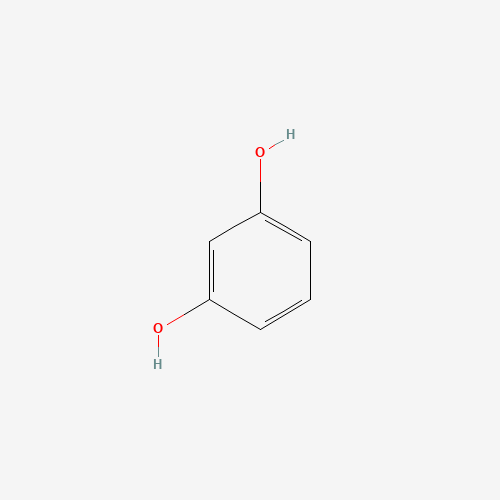
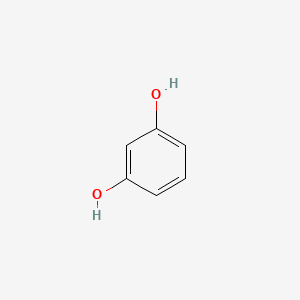
Resorcinol is a 1,3-isomer (or meta-isomer) of benzenediol with the formula C6H4(OH)2. It is used as an antiseptic and disinfectant in topical pharmaceutical products in the treatment of skin disorders and infections such as acne, seborrheic dermatitis, eczema, psoriasis, corns, calluses, and warts. It exerts a keratolytic activity. Resorcinol works by helping to remove hard, scaly, or roughened skin. Although it is primarily indicated for use as a topical application, resorcinol also possesses a well-documented anti-thyroidal activity that is generally not relied upon for any kind of formal therapeutic indication.
Solubility greater than or equal to 100 mg/mL at 65.3 °F (NTP, 1992)
Formula
C6H6O2
Mol. Weight
110.11
CAS #
108-46-3
Form
Liquid
State
Resorcinol is a very white crystalline solid that becomes pink on exposure to light if not completely pure. Burns although ignition is difficult. Density approximately 1.28 g / cm3. Irritating to skin
See origin →
Functions
Antioxidant
Fights free radicals — the unstable molecules from UV, pollution, and stress that break down collagen and cause premature aging.
Denaturant
Hair Dyeing
Perfuming
Added for scent. Can be natural or synthetic. Common irritant and allergen — one of the top reasons people react to products.
Fights acne
Causing bacteria
Neutralizes free radicals
Supports cell turnover
Traditional Use
Discovered as a chemical compound in the 1800s and first synthesized in 1864. Adopted in the 1920s-1940s as an ingredient for treating acne and hyperpigmentation, and later incorporated into hair dyes and other cosmetics.
Skin Types
●all-skin-types
Best For
Acne
Pregnancy & Breastfeeding Safe
No
EWG
9
CIR
Safe as used
Pregnancy
No
Restricted By
CIR Safety Findings
medical-approval
all-shades-safe
Phototoxicity Concern
Concentration Guide
2.0%
0%3%
Reg. Limit
FDA OTC limit (Acne): 2%. 21 CFR 333.310
Regulatory Agencies
🧂Conflict of interest.
4-Chlororesorcinol.
Burnett CL
International journal of toxicology, 2017
Addendum to the Final Report on the Safety Assessment of 2-Bromo-2-Nitropropane-1,3-Diol (JEPT 4(4) 47-61 1980)
Cosmetic Ingredient Review (CIR) Expert Panel
International Journal of Toxicology
Final Report of the Safety Assessment for 2-Bromo-2-Nitropropane-1,3-Diol
Cosmetic Ingredient Review (CIR) Expert Panel
International Journal of Toxicology
Final Report on the Safety Assessment of 2-Methylresorcinol and Resorcinol
Cosmetic Ingredient Review (CIR) Expert Panel
International Journal of Toxicology
Final Report on the Safety Assessment of 4-Chlororesorcinol
Cosmetic Ingredient Review (CIR) Expert Panel
International Journal of Toxicology
Revised Tentative Report: Amended Safety Assessment of 2-Bromo-2-Nitropropane-1,3-Diol as Used in Cosmetics
Cosmetic Ingredient Review (CIR) Expert Panel
International Journal of Toxicology
2-Bromo-2-Nitropropane-1,3-Diol
European Commission
EU Cosmetic Ingredient Database (CosIng)
2-Methylresorcinol
European Commission
EU Cosmetic Ingredient Database (CosIng)
4-Chlororesorcinol
European Commission
EU Cosmetic Ingredient Database (CosIng)
Resorcinol
European Commission
EU Cosmetic Ingredient Database (CosIng)
2-Bromo-2-Nitropropane-1,3-Diol
Environmental Working Group (EWG)
EWG Skin Deep Cosmetics Database
2-Methylresorcinol
Environmental Working Group (EWG)
EWG Skin Deep Cosmetics Database
4-Chlororesorcinol
Environmental Working Group (EWG)
EWG Skin Deep Cosmetics Database
Resorcinol
Environmental Working Group (EWG)
EWG Skin Deep Cosmetics Database
2-Bromo-2-nitropropane-1,3-diol
Health Canada
Health Canada Cosmetic Ingredient Hotlist
Resorcinol
Health Canada
Health Canada Cosmetic Ingredient Hotlist
Kitty Litter Dermatitis from-Bromo-2-Nitropropane-1,3-Diol.
Sullenbarger JW, Hensley B, Travers JB
Skinmed, 2017
Verified Jun 2026 · 🧪 = conflict
Data: PubChem · CosIng · EWG · CIR