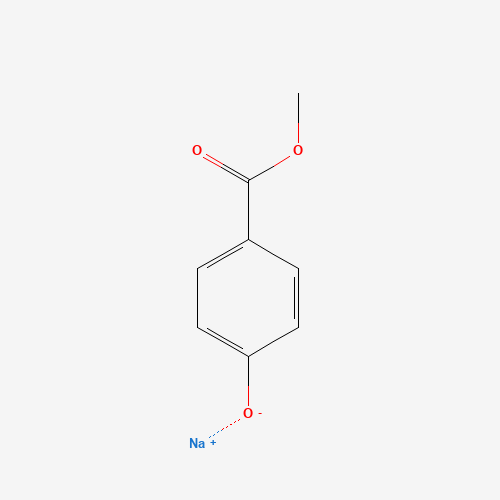
Sodium Methylparaben
AKA “Methylparaben sodium, sodium methyl paraben, Paratexin ms, Paridol mna, Nipagin m sodium, Solbrol m sodium salt, CR6K9C2NHK, Methylparaben, sodium salt, Ns 3500s, DTXSID1042156”
Preservative
Ingredient Facts
Sodium methylparaben
AKA: Methylparaben sodium, Sodium methyl paraben, Paratexin ms, Paridol mna, Nipagin m sodium, Solbrol m sodium salt, CR6K9C2NHK, Sodium salt, Ns 3500s, DTXSID1042156
Preservative · Preservative · EWG: 4
Synthetic
Preservative
Not Clean
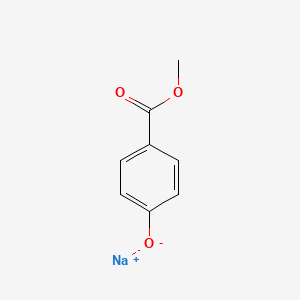
Sodium 4-(methoxycarbonyl)phenolate
Formula
C8H7NaO3
Mol. Weight
174.13
CAS #
5026-62-0
Form
Powder
State
White, hygroscopic powder
See origin →
Functions
Preservative
Keeps your product from growing bacteria, mold, or yeast. Without these, that jar of cream becomes a petri dish in about a week.
Anti-Inflammatory
Antimicrobial
Fights Acne
Prevents microbial growth
Traditional Use
The sodium salt form of methylparaben, developed in the early 20th century. Used as a synthetic preservative to extend shelf life of cosmetic and personal care products.
Skin Types
●all-skin-types
Best For
General
Pregnancy & Breastfeeding Safe
Yes
EWG
4
CIR
Safe as used
Pregnancy
Yes
Restricted By
CIR Safety Findings
medical-approval
all-shades-safe
Phototoxicity Concern
Concentration Guide
8.0%
0%11%
Reg. Limit
EU regulatory limit: 8.0%. 0,4% (as acid) for single ester 0,8% (as acid) for mixtures of esters Source: EU Cosmetics Regulation (EC) 1223/2009, Annex V (Preservatives), Entry 12. Dermal absorption: 0.1%. Source: CIR Safety Assessment (CIR Seq 746).
Regulatory Agencies
Final amended report on the safety assessment of Methylparaben, Ethylparaben, Propylparaben, Isopropylparaben, Butylparaben, Isobutylparaben, and Benz
International journal of toxicology, 2008
Final amended report on the safety assessment of Methylparaben, Ethylparaben, Propylparaben, Isopropylparaben, Butylparaben, Isobutylparaben, and Benz
International journal of toxicology, 2008
Final amended report on the safety assessment of Methylparaben, Ethylparaben, Propylparaben, Isopropylparaben, Butylparaben, Isobutylparaben, and Benz
International journal of toxicology, 2008
Effects of Sodium Salts of Fatty Acids and Their Derivatives on Skin Permeation of Cromolyn Sodium.
Akinbote OE, Verana G, Dandekar AA, Tijani AO, Mishra D et al.
AAPS PharmSciTech, 2023
Effects of Sodium Salts of Fatty Acids and Their Derivatives on Skin Permeation of Cromolyn Sodium.
Akinbote OE, Verana G, Dandekar AA, Tijani AO, Mishra D et al.
AAPS PharmSciTech, 2023
Final Amended Report on the Safety Assessment of Methylparaben, Ethylparaben, Propylparaben, Isopropylparaben, Butylparaben, Isobutylparaben and Benzylparaben as used in cosmetic products
Cosmetic Ingredient Review (CIR) Expert Panel
International Journal of Toxicology
Final Report on the Safety Assessment of Methylparaben, Ethylparaben, Propylparaben, and Butylparaben
Cosmetic Ingredient Review (CIR) Expert Panel
International Journal of Toxicology
Methylparaben
European Commission
EU Cosmetic Ingredient Database (CosIng)
Potassium Methylparaben
European Commission
EU Cosmetic Ingredient Database (CosIng)
Sodium Methylparaben
European Commission
EU Cosmetic Ingredient Database (CosIng)
Methylparaben
Environmental Working Group (EWG)
EWG Skin Deep Cosmetics Database
SODIUM SALT
Environmental Working Group (EWG)
EWG Skin Deep Cosmetics Database
Sensory irritation to methylparaben is caused by its low metabolism in the skin.
Ninomiya R, Nishijima T, Aoshima M, Sakaguchi H, Tokura Y
The Journal of dermatology, 2023
Analytical Method for the Identification and Assay of Kojic Acid, Methylparaben, and Propylparaben in Cosmetic Products Using UPLC: Application of ISO
Qadir MA, Ahmed M, Shafiq MI, Ali A, Sadiq A
Journal of AOAC International, 2016
Verified Jun 2026
Data: PubChem · CosIng · EWG · CIR